The French art of living has its website Live in France like the French

STORY

PICTO CURIEUX Created with Sketch.

The Montmartre Grape Harvest Festival

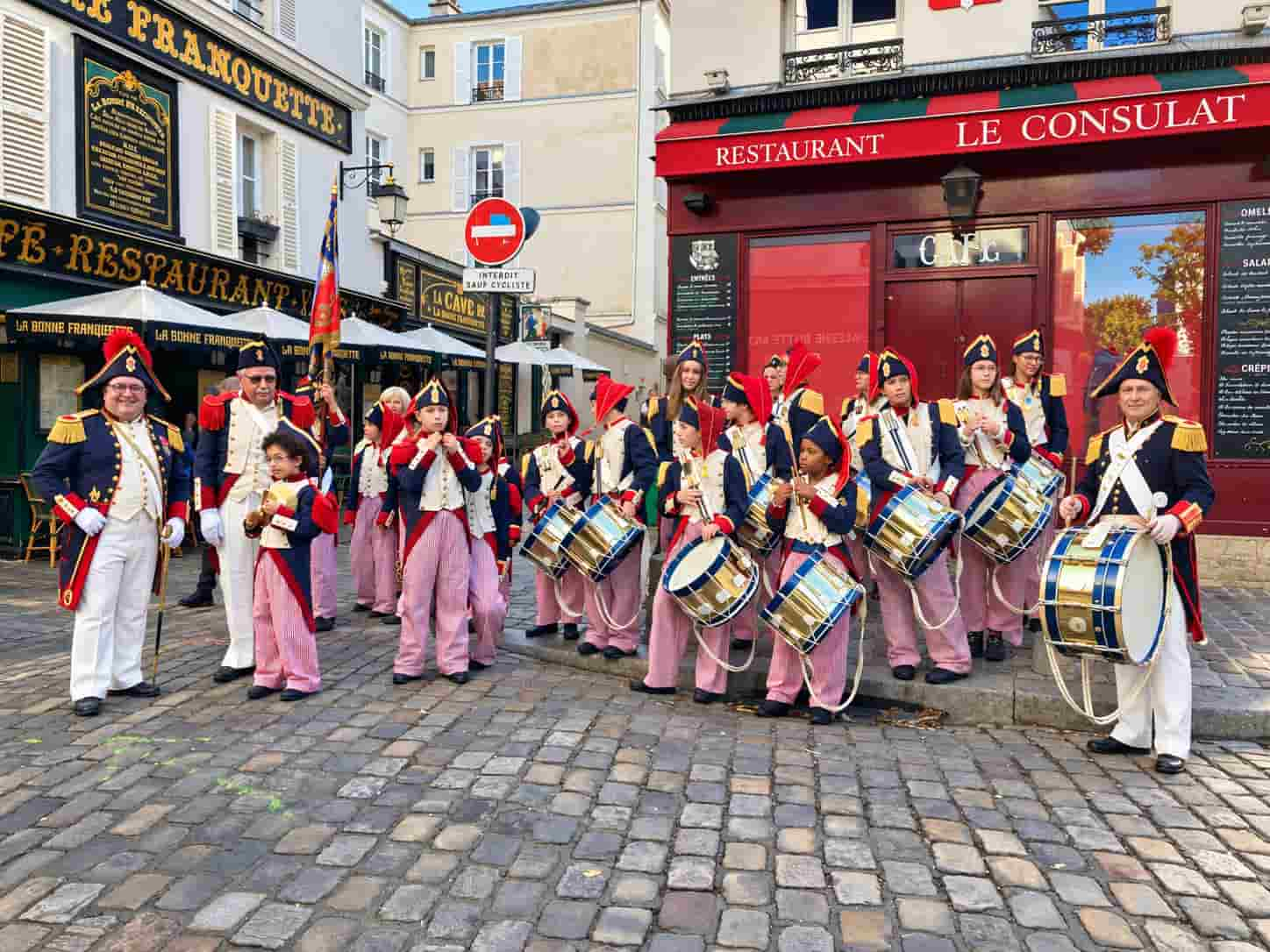
Every year, a unique ritual takes place on Montmartre Hill: the grape harvest. At the foot of the historic Lapin Agile cabaret and just a stone’s throw from the must-see Place du Tertre, a small vineyard produces a wine that takes center stage during the Fête des Vendanges. As Paris’s third-most-attended event, this bucolic and festive gathering transforms this unspoiled, village-like setting into an open-air theater for 5 days.

Millennia-old vines, a renaissance nearing its centennial

Montmartre’s winemaking history dates back to the 12th century, when the nuns of the Abbey of Montmartre (to whom we owe the name of the Abbesses metro station) planted the first vines on the slopes of the Butte.

For centuries, wine flowed freely in this small area, which was not yet part of the greater city of Paris, and although it did not have a reputation as a grand cru, it attracted anyone wishing to avoid the “octroi”, the municipal tax levied on goods entering the city of Paris proper. 
After Montmartre was annexed to the French capital in 1860, three-quarters of the Butte were covered with buildings that gradually replaced the vineyards, which were simultaneously facing increasing competition from the major regional vineyards.

It wasn’t until 1933 that the tradition was revived. 
Spurred on by the Old Montmartre Society and the 18th arrondissement city hall, a handful of enthusiasts decided to replant grapevines on a plot of land on Rue des Saules, right next to the pink house where Maurice Utrillo once lived, a spot that tourists from around the world capture every day on Instagram.

The following year saw the first Fête des Vendanges, which, while celebrating the arrival of the new vintage, pays tribute to the history of this former independent commune where the less fortunate would come to drink and dance in cabarets and open-air dance halls immortalized by Toulouse-Lautrec and Auguste Renoir.

Nearly a century later, this convivial tradition endures and has lost none of its vitality.

A wine for a good cause, a generous celebration

Le Clos Montmartre, this picturesque 1,556-square-meter vineyard, produces approximately 700 bottles of Gamay and Pinot Noir each year. A modest yield, but one with immense symbolic significance: all proceeds from the sale of the wine are donated to social causes in the 18th arrondissement.

It’s another way of becoming part of the Butte’s history and, more specifically, of the legacy of another painter who brought fame to the area, Francisque Poulbot (father of the famous “P’tits Poulbots”), who opened a clinic in 1901 for needy children in this arrondissement, whose name is said to derive from “Mount of Martyrs”.

The festival itself has grown far beyond the vineyard and attracts 500,000 visitors every early fall, who enjoy a rich program of events, free and open to all, including:
  • The Grand Parade on Saturday, featuring marching bands, floats, and wine brotherhoods from all over France.
  • The Night Run.
  • The Taste Trail, set up at the foot of Sacré-Cœur, bringing together producers, artisans, and winemakers to showcase local terroirs and short supply chains.
  • The (iconic) “No-Proposal” Ceremony.
  • The Closing Ball.

Much more than just a tourist attraction, this must-see event is both a celebration of cultural heritage and a contemporary celebration of Parisian identity, a warm bridge between an almost-forgotten winemaking past and a creative, supportive, and joyful present.

Do you enjoy this kind of event that celebrates the French way of life? Subscribe to our newsletter so you don't miss the next one.


Valérie from Comme des Français


----

Continue your Montmartre immersion with these articles