The French art of living has its website Live in France like the French

STORY

Created by potrace 1.16, written by Peter Selinger 2001-2019

The Mobilier National

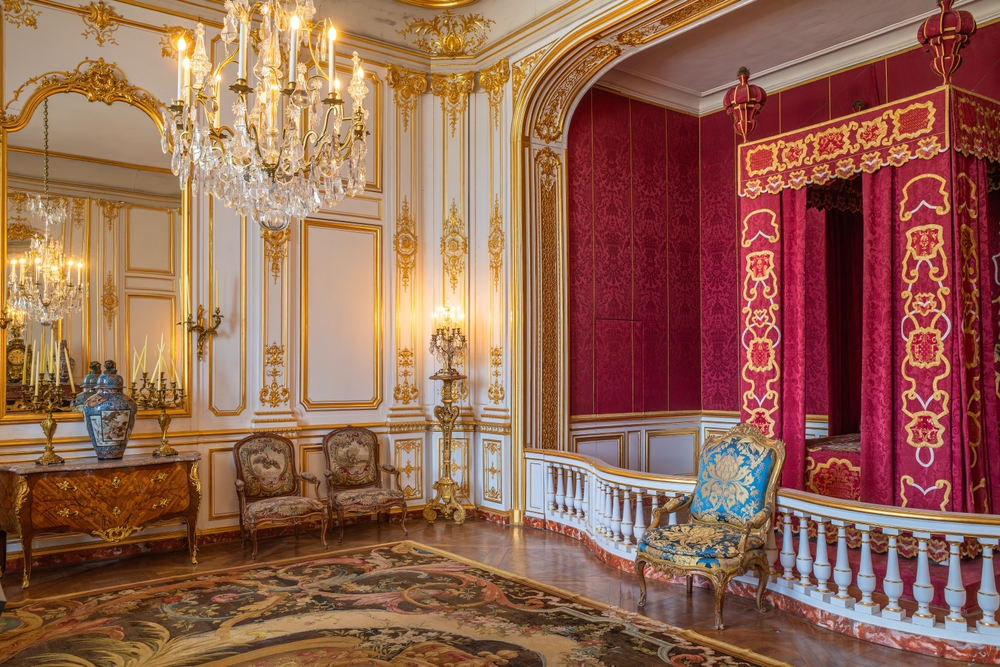
While furniture naturally brings to mind comfort, aesthetics, and decoration, in France it more broadly embodies French excellence through creations that have adorned the halls of power for centuries. A true form of soft power ahead of its time, this body of precious craftsmanship, blending heritage and the art of living, constitutes a living legacy that can be admired today at the Mobilier National.

An institution dedicated to promoting France’s influence

The history of the Mobilier National began during the reign of Louis XIV. In the 17th century, the royal court recognized the importance of image and prestige in diplomacy, and for the Sun King, it was no longer just about governing but also about impressing others and projecting France’s influence across the world.

From this context emerged the Garde-Meuble de la Couronne, the predecessor of the Mobilier National, with its mission to furnish the royal residences and to embody, through each piece, the refinement and power of the kingdom.

Soon, the finest artisans were brought together within dedicated workshops, a showcase of French ingenuity where excellence was established as the standard.

The Manufactories: Showcases of the Arts and Crafts

At the heart of the Mobilier National, these workshops carry on exceptional craftsmanship. Among the most iconic, the Manufacture des Gobelins holds a special place. Also founded in the 17th century, it specializes in haute-lisse tapestry, a demanding technique requiring years of training. Alongside it, the Manufacture de Beauvais develops another type of weaving, lighter yet just as refined. As for the Manufacture de la Savonnerie, it is renowned for its hand-knotted rugs, true works of textile art.

These workshops, where precise, choreographed movements are repeated, bring together several trades: weavers, dyers, restorers, upholsterers, cabinetmakers. All of these manual skills are guided by the same exacting standard: every thread is stretched, every color carefully chosen, and every detail scrutinized for these pieces, which sometimes require several months (or even years) of work.
A living heritage, between tradition and creation

Contrary to what one might imagine, the Mobilier National is not focused on the past. On the contrary, it is part of a dynamic of constant creation, collaborating, for example, with contemporary designers. Invited to imagine pieces that engage with traditional craftsmanship, they evolve forms, uses, and aesthetics through a fruitful exchange that transforms this venerable institution into a laboratory of contemporary design.

Another example of this intersection between heritage and modernity is that one of the Mobilier National’s core missions lies in passing on these precious yet fragile artisanal crafts. Mastering a technique, understanding a material, developing a sensibility, or embracing a culture of detail all require years of apprenticeship. The survival of these crafts thus depends on the mentorship of experienced artisans who, within the workshops, pass on their mastery of centuries-old techniques to the makers of tomorrow.

The Mobilier National, a symbol of a sustainable way of life

In a fast-paced world, these skills remind us of the importance of patience and high standards. They reflect a relationship with beauty and objects that prioritizes meaning over quantity. A luxury rooted in sustainability and the passing down of knowledge that, in the age of AI, also restores the full importance of the handmade. The Mobilier National continues to furnish the Republic’s official venues, its creations still contributing, four centuries after Louis XIV, to France’s global influence.

To delve into the history of this heritage, both tangible and intangible, visit the Mobilier National at the site it has occupied since 1936 (1 rue Berbier du Mets - 75013 Paris). Built by architect Auguste Perret on the site of the former Gobelins Manufactory garden, this venue showcases over 200,000 pieces of furniture and objects and also regularly hosts temporary exhibitions and guided tours.

Enjoy your visit.

Valérie from Comme des Français


----

Continue reading with these articles: