Kouglof, Kougelhopf, Gougelhof or Gougelhopf, if the Alsatian cake can be written in different ways, its meaning is the same: the name means turban in Alsatian. According to the legend, the origin of the cake goes back to the time of the Magi. One day, they stopped in the region and, to thank the inhabitants for their warm hospitality, they made a brioche inspired by the shape of their turbans for dessert. Thus was born the Kougelhopf!
Although the pastry is usually sweet, there are also savoury Kougelhopfs, cooked for example with bacon and walnuts: a mouth-watering recipe.
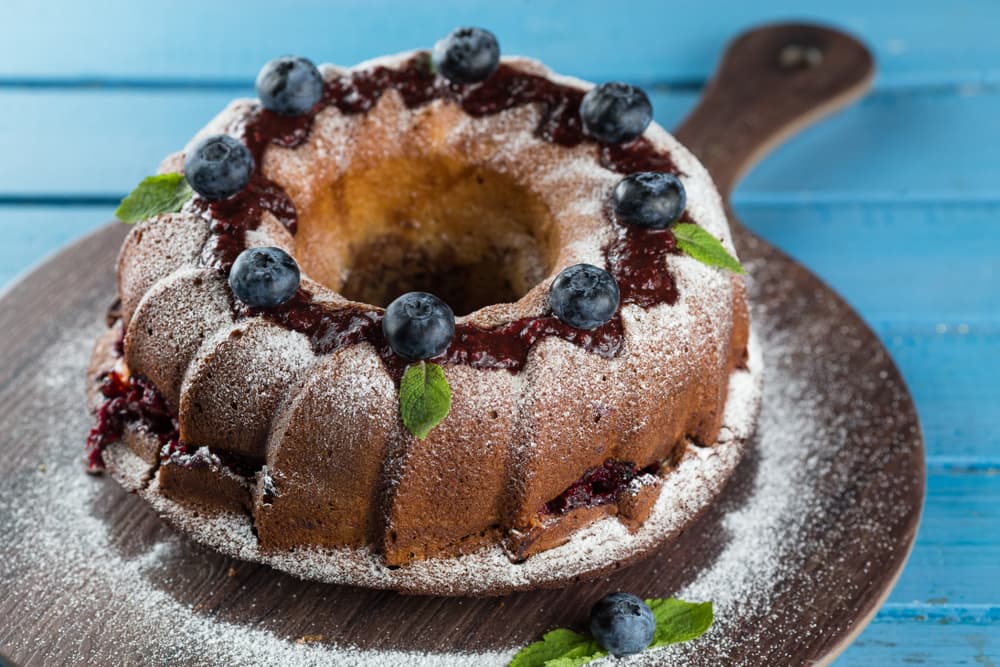
But whatever the recipe, all the famous cakes are always made in the same shape thanks to the Kougelhopf mould, known as a chimney-shaped mould.
This shape allows a better distribution of heat in the heart of the dough during baking. Made of copper or enamelled terracotta, the mould is usually very decorated.
Indeed, in Alsace the Kougelhopf moulds are traditional objects which are passed on from generation to generation and decorate kitchens.
Some say that the Kougelhopf is the father of the rum baba. The King of Poland, having travelled with his court to Alsace, apparently found the Kugelhopf too dry. His cook then dipped the cake in a preparation of syrup and rum to make it softer, thus giving birth to the prototype of baba au rhum.
A Kougelhopf based snack is in any case a step not to be missed during your visit in the region! Sure that this Viennese pastry will conquer your taste buds!
Do you want to start making it ? To your ovens, the official recipe over here.
Marie de Comme des Français
___
To prolong your discoveries of the culinary specialities of our regions of France :