The French art of living has its website Live in France like the French

STORY

PICTO GOURMAND Created with Sketch.

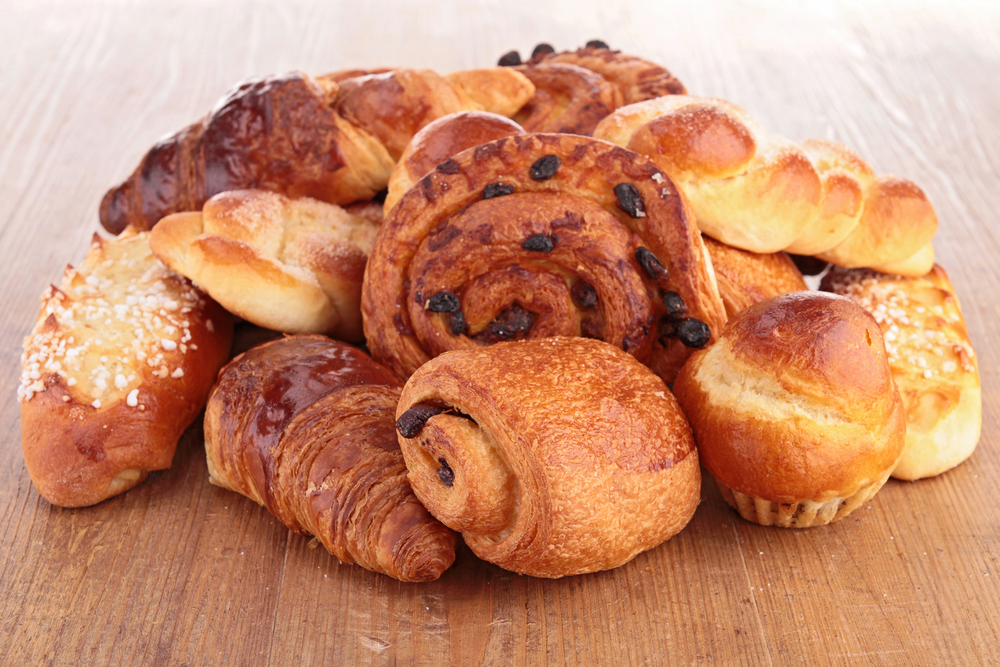
Viennoiseries

An essential part of the French art of living, these pastries with their golden flaky crust and melt-in-your-mouth crumb are, as their name suggests, of Austrian origin. But more than in Vienna, it is in France that they are enjoyed daily in their various gourmet variations.

From Vienna to Paris

The story begins in the Austrian capital in the 17th century. According to the most widely accepted legend, it was in 1683, during the Ottoman siege of the city, that Viennese bakers invented the Kipferl, a small crescent-shaped roll symbolizing victory over the former Ottoman Empire.

This first croissant arrived in Paris nearly two centuries later, when the Austrian August Zang opened the “Boulangerie Viennoise” at 1838 Rue de Richelieu. It was an instant hit. French bakers adapted the recipe and, in the early 20th century, replaced the Kipferl with a butter-based puff pastry that was lighter and crispier. 

The French croissant, as we know it today, was born.

The flagship products of a baking heritage

  • Undoubtedly, the croissant reigns supreme. Like the baguette it often accompanies, it has even become a symbol of France around the world. With its 64 layers of butter and dough, it also embodies the technical excellence of the lamination process.

  • The pain au chocolat claims a market share nearly equal to that of the croissant, and its name fuels a linguistic debate that is as passionate as it is good-natured. In the Southwest, the two bars of dark chocolate nestled in puff pastry are, in fact, called “chocolatine.”

  • Brioche, whose recipe appeared as early as medieval manuscripts, has earned its reputation over the centuries and comes in different variations depending on the region: 
Vendée brioche is braided and flavored with rum and orange blossom, while the brioche from Savoie, is topped with a crust of pearl sugar and candied sour cherries.

  • Raisin bread, with its ribbon-like appearance of puff pastry filled with pastry cream and raisins, also comes in several variations in French bakeries: with pistachios, flavored with rum, or topped with walnuts…

  • The apple turnover is the third-best-selling pastry in France. Since its creation in the 18th century, its simplicity (puff pastry and apple compote) has made it a formidable indicator of a bakery’s quality.

A French passion and some tasting rituals

The French consume approximately 10 billion pastries per year, or 150 per person annually. The croissant alone accounts for nearly 40% of sales in this market, which is worth over 2 billion euros. A success that has withstood “healthy” trends and successive dietary fads, with consumption in France remaining stable over the past decade and well above that of Germany or Great Britain.

In the land of gastronomy, pastries are not viewed as mere snacks. Much like the Anglo-Saxon tea time, it is observed as a well-established ritual: fresh from the oven between 6 a.m. and 8 a.m., purchased at a bakery (rather than a supermarket, since the latter doesn’t waft those appetizing buttery aromas out onto the street), and eaten the same day, for breakfast or as an afternoon snack, to well appreciate its melt-in-your-mouth texture.
As for what to pair them with, coffee remains the go-to choice: espresso for busy mornings, café au lait in a bowl for leisurely starts to the day, like on weekends, when these pastries take on a more convivial feel. A platter of croissants shared at brunch, raisin bread tucked into a basket for a Sunday picnic, sliced brioche arranged on the family table… any occasion is a good one to savor these treats, which some purists recommend enjoying plain, without jam or butter, so that the interplay of the flaky layers and the flavor of AOP butter (from Charentes-Poitou or Bresse) can be fully tasted.

Matcha-filled croissant, pear and saffron turnover, raisin bread with a twist featuring walnuts: while pastries have been a source of joy for the French for centuries, they continue to evolve and incorporate new specialties such as babka (a chocolate-marbled brioche originating in Eastern Europe) or kouign-amann, the famous Breton cake with salted
butter caramel, now available in individual slices to go.

Surely because, regardless of the recipe, a well-made pastry enjoyed while still warm remains one of the simplest yet most satisfying sensory experiences that the country of Auguste Escoffier offers to millions of food lovers every day.


Valérie from Comme des Français