The French art of living has its website Live in France like the French

STORY

Where to stay in Porquerolles

Nestled in the Gulf of Hyères, this island renowned for its incomparable light is a Mediterranean gem that has fascinated visitors since the Renaissance. Located in the heart of the Îles d'Or archipelago, it invites you to savor the simple pleasures of life: strolling on sandy beaches, admiring the spectacle of the sea and mountains from the trails, and immersing yourself in a rich historical and natural heritage. Discover where to stay to make the most of your stay in this jewel of the French Riviera. 

A legendary island

Once upon a time, there was a prince named Olbianus, lord of Olbia (Hyères) and father of four daughters of incomparable beauty. One day, as they were swimming offshore, a pirate ship appeared and the father begged the gods not to let his precious offspring be kidnapped. The princesses then felt their limbs freeze and turn to stone. The three sisters furthest away formed the Îles d'Or, while the youngest, closest to the shore, became the Giens peninsula. 

Legend has it that these lands have retained the breathtaking beauty of Olbianus' four children and now form a 22-kilometer archipelago that includes Port Cros, Île du Levant, and Porquerolles.

The island has been inhabited since ancient times and has welcomed Celts, Phocaeans, and Romans. To protect its coastline, it was fortified in the 16th century with the construction of the Sainte-Agathe, Langoustier, and Alycastre forts. The village dates back to the early 19th century and the lighthouse was built in 1837. In 1912, Porquerolles was given as a gift by a businessman to his wife, marking the beginning of modern wine and vegetable farming.

A century later, the island became part of the Port-Cros National Park and now enjoys the status of “Heart of the National Park,” guaranteeing the protection of its natural and cultural heritage.

A destination where life is good

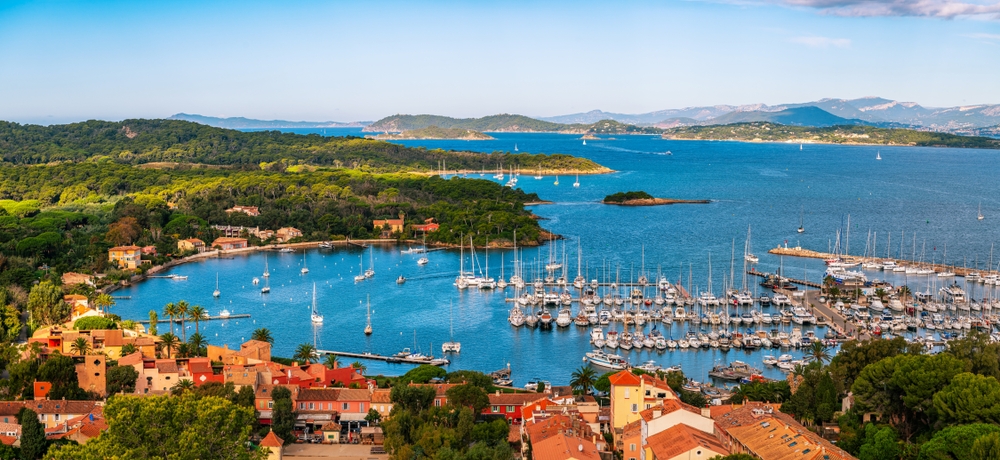
At 7 km long, Porquerolles is the largest and most populated of the Îles d'Or (a name that refers to the golden reflections that appear on its rocks in certain light). Its northern part, with its idyllic beaches such as La Courtade and Notre-Dame, is perfect for relaxing and swimming in crystal-clear waters. The south reveals a wilder landscape: steep cliffs, hiking trails through scrubland, pine forests, and oak groves. And the hinterland, consisting of plains and botanical crops, bears witness to the rich agricultural and horticultural heritage of this 1,250-hectare territory.
Accessible only by boat from Hyères or the Giens peninsula (a 15-minute crossing), Porquerolles preserves its exceptional environment by banning cars and campsites. These two features contribute to the calm and serenity of this crescent-shaped island, where cycling and walking are the two preferred means of transportation. Several agencies on the island offer two-wheeled rentals (mountain bikes, city bikes, and electric bikes), and there are numerous marked trails for hiking enthusiasts.
Where to stay during a trip to Porquerolles?

Between its limited surface area and its status as a protected natural area, the island has a fairly limited but nevertheless varied range of tourist accommodation (traditional hotels, guesthouses, boats, etc.) depending on whether you are looking for a seaside, nature, romantic or unusual holiday.

Hôtel Résidence Les Mèdes
Nestled in the crescent on the north coast, the village of Porquerolles is home to most of the shops, restaurants, and bike rentals. It also includes this establishment, which offers fully equipped apartments, rooms, and bright suites that can accommodate two to six people. If you don't know where to stay in Porquerolles, this address, with its beautiful garden with terrace, bar, and gourmet restaurant, is ideal, located 400 meters from La Courtade beach (where boats arrive from the mainland) and offering two types of accommodation: 
“hotel” with breakfast and daily cleaning or “residence” for accommodation only. The hotel also offers all the comforts you need for a successful stay: open-plan kitchen, air conditioning, TV, Wi-Fi, travel cots for young children, and more.

Le Porquerollais
In the shade of eucalyptus trees, this intimate hotel located on the village square in Porquerolles is a haven of peace. Its six rooms, divided between the square side and the courtyard side, its bar, and its restaurant offer an intimate family home atmosphere. Perfect for making the most of your stay on the island.

Le Mas du Langoustier
Equipped with a private swimming pool, two tennis courts shaded by pine trees, two restaurants, and a bar, this 4-star hotel has 47 rooms overlooking the pine forest or the patio and offers privileged access to the black sand beach cove.
Villa Sainte-Anne
Built by Abbé Bozon to develop and enrich the diocese, the Sainte-Anne guesthouse was established a stone's throw from the church of the same name (built in 1850 and listed as a historic monument), making it one of the oldest hotels on the island. Today, Villa Sainte-Anne has 25 rooms, 2 indoor rooms, 1 patio, and 1 large outdoor terrace. Its location makes it a very convenient starting point for walking tours.

To fully experience life on an island, you can also sleep on a yacht moored in Porquerolles

With air-conditioned rooms, private bathrooms, and fully equipped kitchens, the pirates of legend would surely have appreciated all the comforts of this unusual accommodation, as well as its terrace overlooking the sea.  

What to see and do in Porquerolles

Porquerolles is a true paradise for outdoor activities, with more than half of the island protected by the Port-Cros National Park, which works to preserve the island's terrestrial and maritime heritage. Follow the marked botanical trail to admire the dense scrubland, pine forests, and oak groves, and you're sure to spot seagulls, cormorants, and gannets along the way. 

In addition to visiting the lighthouse, you can also enjoy:
  • 54 km of marked trails.
  • Trails designed for mountain bikes.
  • A scuba diving trail revealing the richness of the seabed and the exceptional biodiversity of the Mediterranean (posidonia, red gorgonians, mother-of-pearl, groupers, multicolored wrasses, etc.).
  • A wide range of water sports: sailing, kayaking, paddleboarding, jet skiing, canoeing, and more.  
The various civilizations that have successively occupied the island have also endowed it with a rich historical heritage. Its fortifications, which during the Renaissance were intended to protect its coasts from Saracen incursions and piracy of all kinds, are still clearly visible, notably in the forts of Langoustier and Alycastre.

This well-preserved defensive heritage also includes Fort Sainte-Agathe, built on the orders of François I in 1531. Strategically positioned, the island's oldest fortification served as a strategic stronghold for centuries, providing a commanding view of the Hyères harbor and the Provençal coastline. Managed by the Port-Cros National Park, this island monument, whose silhouette can be seen from the port, hosts exhibitions dedicated to the history, culture, and biodiversity of Porquerolles.

Behind its 4-meter-thick walls, art installations designed in collaboration with Villa Carmignac are also on display each year. 
Set in 15 hectares of gardens featuring around fifteen sculptures designed especially for the site, this foundation is well worth a visit with its more than 300 works of contemporary art, 2,000 m² of exhibition space lit by a water ceiling, and temporary exhibitions.
An immersive cultural experience designed to be in harmony with the natural setting that serves as its backdrop.

Finally, before or after visiting Porquerolles, the town of Hyères-les-Palmiers is well worth a visit. 

The southernmost and oldest resort on the French Riviera, whose name refers to the thousands of palm trees planted over the years on its territory, is an illustration of the Mediterranean art of living with its old quarters, cobbled streets, Provençal market, and numerous gardens and monuments (Fort de la Repentance, Parc Saint-Bernard, Villa Noailles).

A timeless interlude to look forward to

Porquerolles is much more than an island to visit, it is a sensory and rejuvenating experience where every moment invites contemplation and relaxation through:
  • Swimming in secluded coves.
  • Terraces where you can enjoy the Mediterranean light.
  • Markets and restaurants inviting you to taste local products.
  • Walks along preserved trails where you can admire the island's natural beauty.
  • A variety of heritage and art tours.
  • Charming hotels.

This veritable laboratory of Mediterranean lifestyle, where heritage, nature, and comfort come together, is very popular, so it is recommended that you plan your stay several months in advance, especially if you plan to visit during the high season, which is logically July and August. 

If you have the opportunity to visit during the off-season, the gentle way of life in Porquerolles is just as noticeable as in summer, and hotels are more affordable. So don't hesitate to find out more now so you can enjoy an inspiring stay there. 


Valérie from Comme des Français


---

Stay in the enchanting setting of the French Riviera with these articles