The French art of living has its website Live in France like the French

STORY

PICTO CURIEUX Created with Sketch.

Surnames and place names that have entered everyday language

While the French language has contributed many words to the language of Shakespeare, it also has the distinction of having given the world objects named after their creators or places of origin. Here’s a look back at 10 terms that have lost their capital letters to become part of everyday language.

France, land of fashion

Denim
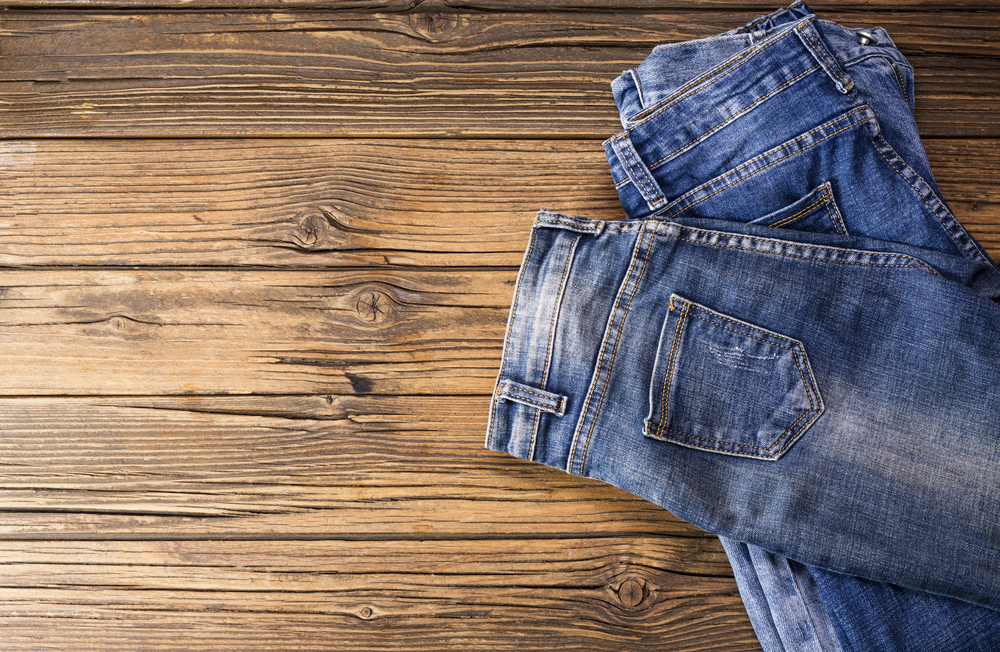
While jeans may seem like a quintessentially American garment today (notably immortalized on the cover of a famous Bruce Springsteen album), the fabric that reigns supreme in the world’s most widely worn garment actually originated in the city of Nîmes, in the Gard department. As early as the 16th century, local weavers were producing a very durable wool-and-silk twill called “serge de Nîmes.” Through linguistic contraction and distortion as exports grew, “de Nîmes” became “denim.” 

More fun facts: it was while trying to imitate an Italian fabric that these weavers accidentally created a more durable fabric with a twill weave. And it wasn’t until industrialization and the high demand for work clothes that cotton became the exclusive fiber used in modern denim.
Tulle
This lightweight, sheer, and openwork fabric takes its name directly from the town of Tulle, in Corrèze. Starting in the 18th century, this town in the Limousin region developed a unique expertise in the manufacture of this fabric, essential for making ballet tutus and fine lingerie, to the point that its geographical name became the generic term for it.

Bikini
In July 1946, French engineer Louis Réard unveiled a revolutionary two-piece swimsuit in Paris. To make a lasting impression, he named it “bikini,” in reference to Bikini Atoll, where American nuclear tests had just taken place, suggesting that his invention would cause just as much of a stir. He was right: it caused a veritable scandal, and both the concept and the name of this daring French creation have since gone down in fashion history.
Silhouette
More surprisingly, and indirectly linked to fashion, we owe this term, which refers to a person’s general shape, to a Comptroller General of Finances under Louis XV. Known for his legendary avarice, Étienne de Silhouette eventually came to symbolize anything made “on the cheap.” This was the case in the 18th century with profile portraits cut out of black paper. Inexpensive to produce, they were thus dubbed “à la silhouette,” an expression that gradually came to refer to the shadow of the profile itself and then to the entire body.

The land of wine

While our winemakers demonstrates tenacity and creativity in cultivating France’s highly diverse vineyards, they sometimes lack inspiration when it comes to naming their products. As a result, several spirits take their names from the region where they are produced, for example:

Cognac
Located in Charente, the town of Cognac gave its name to this wine spirit aged in oak barrels. The global reputation of this spirit is such that the town’s name has become, in many languages, the generic term for this type of spirit, even though the appellation is strictly regulated.

Champagne
The only wine in the world whose name is protected by a strict Controlled Designation of Origin (AOC), this companion to celebratory moments 
was named after the historic region of Champagne.
For centuries, this terroir in northeastern France has produced this unique sparkling wine, whose name has become an international synonym for luxury.

Bordeaux
As with Champagne, the name of the city of Bordeaux has transcended geography to become a common noun. 
It refers not only to the prestigious wines produced in the Gironde vineyards but also to a specific shade of dark red, reminiscent of the color of young red wine.

Memorable inventions

Montgolfière (hot-air balloon)
In 1783, in Annonay in the Ardèche region, brothers Joseph-Michel and Jacques-Étienne Montgolfier successfully completed the first manned flight in history aboard a hot-air balloon. Their surname instantly became the common name for this type of balloon, thus distinguishing their invention from gas balloons (the “Charlières”).

Poubelle
This container, essential to urban cleanliness, owes its name to Eugène Poubelle. In 1884, as prefect of the Seine, he required Parisian property owners to use wicker bins to collect household waste. Although Parisians initially mocked this “Poubelle bin,” the term was eventually simplified to refer to the object itself, which subsequently spread throughout the world.

Guillotine
Although Dr. Joseph-Ignace Guillotin did not invent the machine, it was he who, as a member of parliament, proposed its use in 1789 to humanize the death penalty and make it equal for all, regardless of social class or the crime committed. Indeed, while this method of execution may seem barbaric today, the capital punishments previously meted out to the condemned were far more cruel: burning at the stake, hanging, drowning, quartering, breaking on the wheel… Surprisingly, although the machine was once called “Louisette” in reference to its designer, Dr. Antoine Louis, it was ultimately associated with the second physician.


These ten words bear witness to France’s cultural, industrial, and historical influence. And they remind us that behind an object there is sometimes a story, a place, or a figure that left its mark on an era.

Can you think of any other terms to explore in this article?
Feel free to share them with us :).