The French art of living has its website Live in France like the French

STORY

PICTO ARTISTE Created with Sketch.

The Cannes Film Festival

There are moments when time seems to stand still—during a screening, a standing ovation, or a ray of sunshine glinting off the sea. Every second week of May, Cannes does more than simply welcome the world of cinema; it elevates it, sublimates it, and envelops it in a way of life where culture is savored with the same passion as a fine vintage. Beyond the parade of stars, the most famous of all festivals is a living institution and, for 80 years, an unmissable event blending intellectual rigor with Mediterranean light. 

A story of resistance and daring

To grasp the soul of Cannes, one must go back to its origins, far from the glitz, amid the upheavals of history. It all began in 1939, spearheaded by Philippe Erlanger, supported by Jean Zay, minister of the Popular Front. The idea was as political as it was artistic: to create a free, independent festival to counter the Venice Film Festival, then under the influence of fascist and Nazi totalitarian regimes. 

The first edition, scheduled for September 1, 1939, had to be canceled immediately upon opening, sacrificed on the altar of World War II, which had just broken out. But the spirit of resistance is tenacious. In 1946, in a Europe in ruins seeking to heal its wounds through beauty, the festival rose from the ashes. The first Palais des Festivals, a modest structure, was then built facing the sea.

From the very beginning, France imposed its vision: a festival centered on artistic quality, apolitical in its ideal, yet fiercely committed to freedom of expression. It was here, on this strip of azure sand, that the concept of “auteur cinema” truly took shape. Where Hollywood prioritizes industry, Cannes chooses art. This initial boldness, this refusal of standardization, remains to this day the indelible foundation of the event.

The Croisette, a stage for passion and high standards

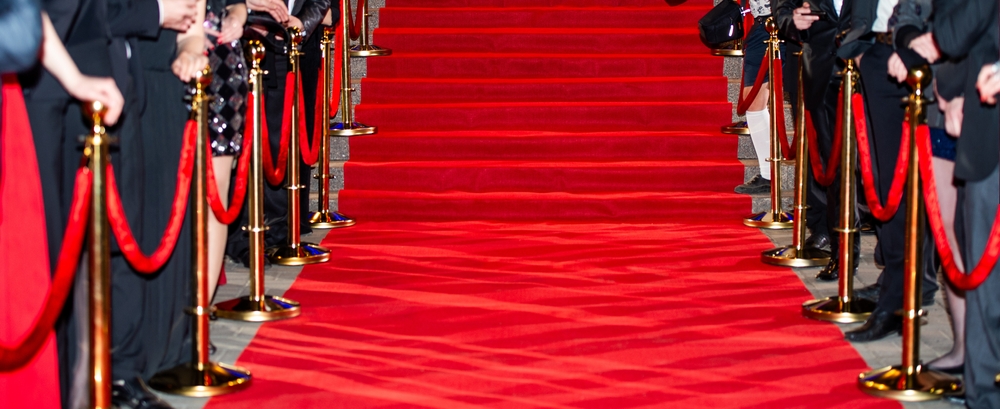
80 years later, the Croisette remains the setting for a world-famous ritual: the red carpet walk up to the Grand Théâtre Lumière. Amid the flashes of cameras, one observes a distinctive elegance, a “French-style” chic amidst the pomp. A prelude to the most anticipated screenings, this parade offers a glamorous showcase for the creations of the greatest fashion designers before other creators—filmmakers and actors from around the world—take center stage.

And once inside the Palais, high standards reign supreme. The official selection is ruthless, an exclusive domain where only films with a unique vision find their place. To be chosen for the competition is to step directly into the history of cinema. Over the decades, the festival has also successfully established prestigious parallel sections such as the Directors’ Fortnight and Critics’ Week to continually renew its promise of discovery

A living legacy

The festival is also about the atmosphere, an intoxicating blend of creative energy and la dolce vita. From private beaches to legendary hotels like the Carlton or the Martinez, every May the entire city buzzes to the rhythm of the screenings. And it is there, between 3 screenings or 2 dinners where champagne flows freely, that alliances are forged and the scenarios of tomorrow are discussed.
A global gathering of visionaries, Cannes is the place where cinema is treated with the deference due to a major art form, where criticism and aesthetics take precedence over commercial dictates and box office numbers. With each edition of the world’s most publicized cultural event, we are reminded that the Lumière brothers’ invention, before being a product, is an encounter, a shared emotion in the darkness of a theater, a work that requires time, risk, and boldness. And that there is no more beautiful place than the Croisette as the global sanctuary of the seventh art