L'art de vivre français a son site Vivre en France comme des Français

STORY

PICTO CURIEUX Created with Sketch.

From the baguette to the beret: the French art of living in 12 objects

The French may not always realize it, but many objects that are part of their daily lives reflect their connection to the country of the art of living. Here’s a look back at several of these silent witnesses to French history, items that touch on gastronomy, folk heritage, and design.

Setting the table

Since the late 19th century, a famous red-and-white checkered tablecloth has graced the tables of bistros and picnics. Evoking a good meal, simple and hearty, this piece of fabric, originally from Vichy (hence its name), is so popular that it has inspired fashion designers and even appeared, in a different color scheme, on the wedding dress of another icon of French culture, Brigitte Bardot.

A faithful picnic companion, the Opinel, with its wooden handle and rotating ferrule, is just as useful for slicing sausage as it is for peeling vegetables.

This testament to centuries-old Savoyard craftsmanship is often found on French tables alongside the Breton earthenware bowl from Quimper. Personalized with its owner’s first name, this timeless object also embodies a tradition of craftsmanship that resists standardization.
Other items directly associated with the French art of living include the French press, which, with its slow and aromatic brewing process, brings out the authentic flavor of black coffee.
A drink often sipped slowly during long conversations in which the French talk… about their last meal or what they’ll eat at the next one.

Speaking of which, at dinner, the hand-blown glass wine decanter serves as a reminder that in the land of wine culture, a good wine is shared and savored with simplicity, far removed from the sometimes elitist conventions of sommelier culture.

Let’s sit down to eat

It’s impossible to describe the daily life of the French without mentioning the baguette, whose golden crust and airy crumb are part of the sacred ritual of returning from the bakery. For a French person, it’s simply irresistible to take a bite of the crust as they step out of one of these temples of culinary delight that are also a hallmark of France.

Another source of culinary pride that pairs perfectly with the baguette is Camembert. Like other AOP cheeses, this product varies by region, a fact that prompted General de Gaulle to remark, “How can you govern a country that has 246 varieties of cheese?”

One drink, however, manages to unite all French people: pastis, which, at aperitif time, immediately transports the mind to the warmth of the south and sun-drenched terraces. It’s a ritual that Marcel Pagnol brought to prominence.

Going out

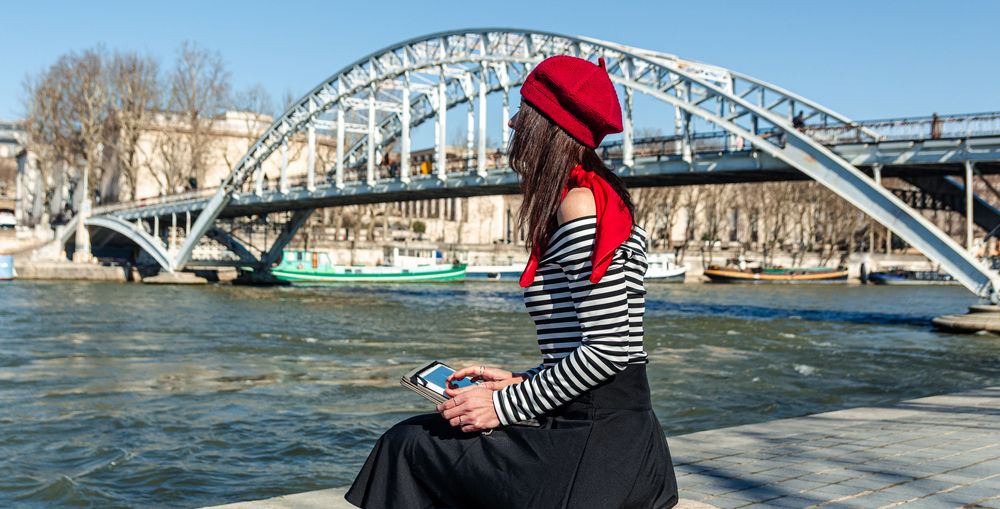
Whether worn on the head or tucked into a pocket, the felted wool beret evokes both the wise elders of the French countryside and the artists of Paris’s Left Bank. An iconic French accessory around the world, this timeless headwear is now popular far beyond France’s borders.

The same goes for another globally successful icon, the sailor shirt, which has made the leap from sailors’ uniforms to haute couture runways. A timeless symbol of casual elegance, its blue and white stripes are a staple in any French wardrobe worth its salt.

It’s no surprise, then, to see it worn in village squares or shaded parks during a game of pétanque. In the spirit of friendly competition, the clinking of these metal balls often sets the rhythm for the summer afternoons of French vacationers.

To this list, we could finally add the Citroën 2CV. Featured in many French films and TV shows, the “deudeuche” will soon be reborn in an electric version. 
This is proof of its unwavering popularity and, as with other “Made in France” items, of the die-hard Gauls’ deep attachment to their history.

Valérie from Comme des Français


-----

Discover more French quirks